
Royals visit Mount Edgcumbe
In an article published in the Pall Mall Magazine in 1897 Lady Ernestine Edgcumbe (1843–1925), granddaughter to the 2nd Earl, describes some of the many royal visits made to Mount Edgcumbe. An early visitor was Cosimo III de’ Medici who toured England in 1669 to take his mind off an unhappy marriage at home in Florence. When King George III and Queen Charlotte came to Mount Edgcumbe in 1781 the visit was so successful that their host, George Edgcumbe, was made a Viscount. A steady stream of royal and other illustrious visitors from near and far visited throughout the centuries, outdoing each other in their praise for the parkland.
“One of the earliest records of a royal visit is that of Cosimo III de’ Medici, whom Sir Richard entertained on his way to the Court of Charles II [in 1669]. The Saluting Book (which only refers to two or three years) mentions – among many others – the Dukes of Gloucester and Cumberland, Princess Amelia, the “Marquess Gracioli”, General Paoli, and Mr and Mrs Garrick.”
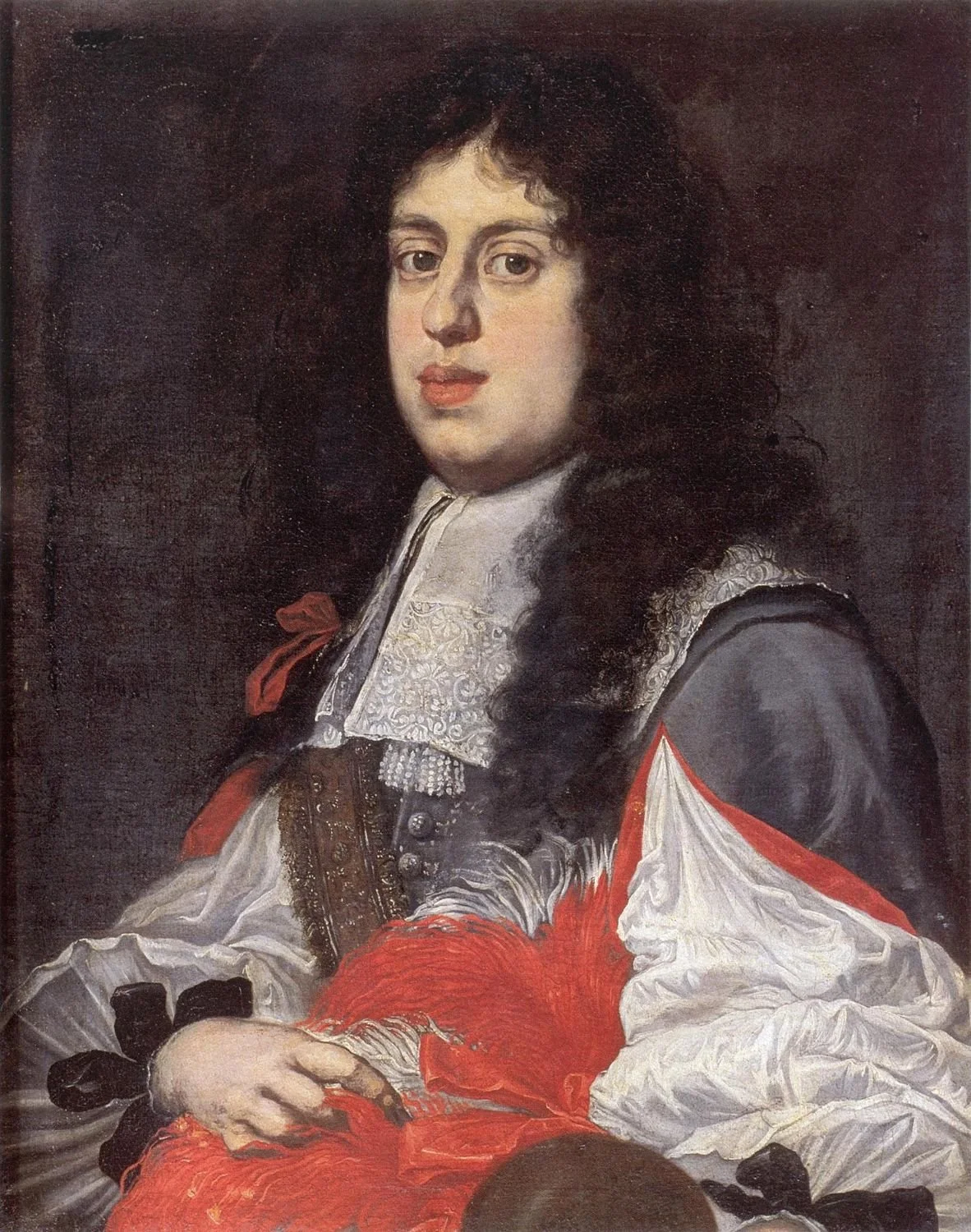
Cosimo III painted in 1660 by Giusto Sustermans. The painting is in the public domain.
Cosimo (1642-1723) embarked on a trip to England to distract himself from an unhappy marriage back in Florence. Due to a navigational mishap he ended up in Plymouth in 1669 where his travel companion, the Italian philosopher and diplomat Lorenzo Magalotti (1637-1712) records him being entertained by Sir Richard Edgcumbe (1640-1688) before setting off for London to meet Charles II.
“In 1781 George III, and Queen Charlotte (attended by Miss Burney) came from Saltram, which had been lent them by Lord Boringdon, and dined in the Saloon, the largest room then existing, the decorations of which date from the first Lord Edgcumbe, who also planted the “Terrace”, and has justly earned the gratitude of his descendants.”
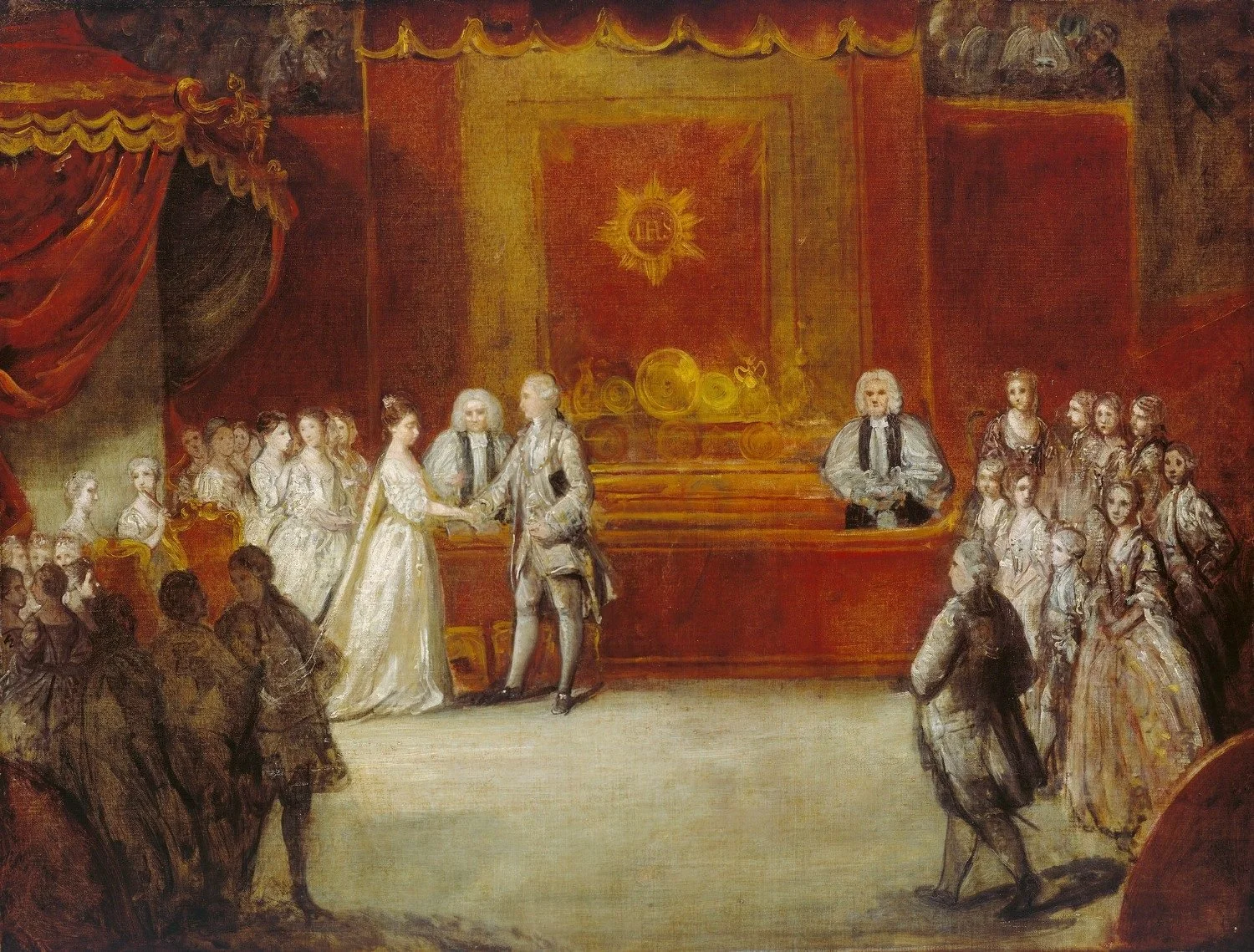
George III & Charlotte Mecklenburg-Strelitz painted at the wedding by Joshua Reynolds in 1761. Seventeen year old Charlotte had arrived in England just hours before the nuptials but the relationship was to last 57 years and produce 15 children. The painting is held in the Royal Collection and is in the public domain.
The visit to Mount Edgcumbe by King George III (1738 -1820) and Queen Charlotte (1744-1818) was clearly a success for the host, George Edgcumbe (1720-1795), was made Viscount Edgecumbe and Valletort. He was subsequently elevated to an Earl in 1789.
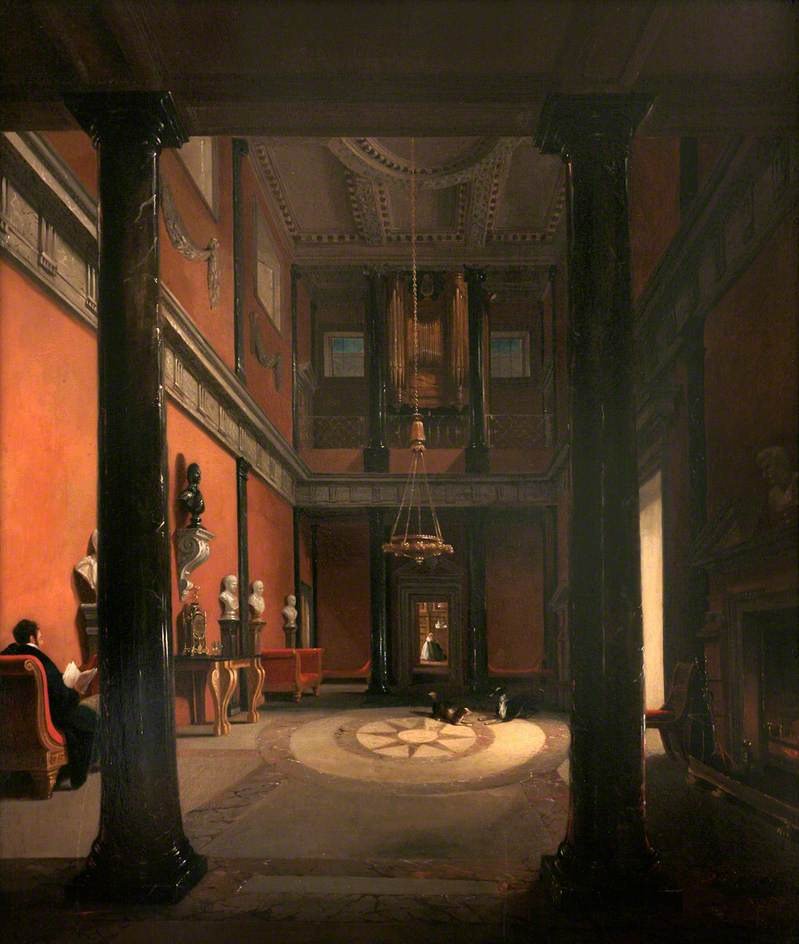
The Interior of a Large Country House (Great Hall, Mount Edgcumbe) by John Scarlett Davis (1804-1845) © Mount Edgecombe House
This was the Saloon where King George III and Queen Charlotte would have dined.
“William IV and Queen Adelaide stayed at Mount Edgcumbe before their succession; and our gracious Queen [Victoria] has more than once honoured it by her presence, as have the Prince and Princess of Wales, the Duke and Duchess of Saxe-Coburg during the three years when his Royal Highness was Commander-in-Chief in the West, and other members of the Royal Family.”
“Amélie, Queen of the French, when residing at Kitley used to visit the place with the Duchess d’Orléans and the young Comte de Paris and Duc de Chartres; and the lamented Emperor Frederick when Crown Prince, the Crown Princess and their sons have more than once done so. The last occasion on which they came together was after the close of the Franco-German War; and by singular coincidence, the deposed Emperor Napoleon III, with the Prince Imperial, had come from Torquay to luncheon two days before.”
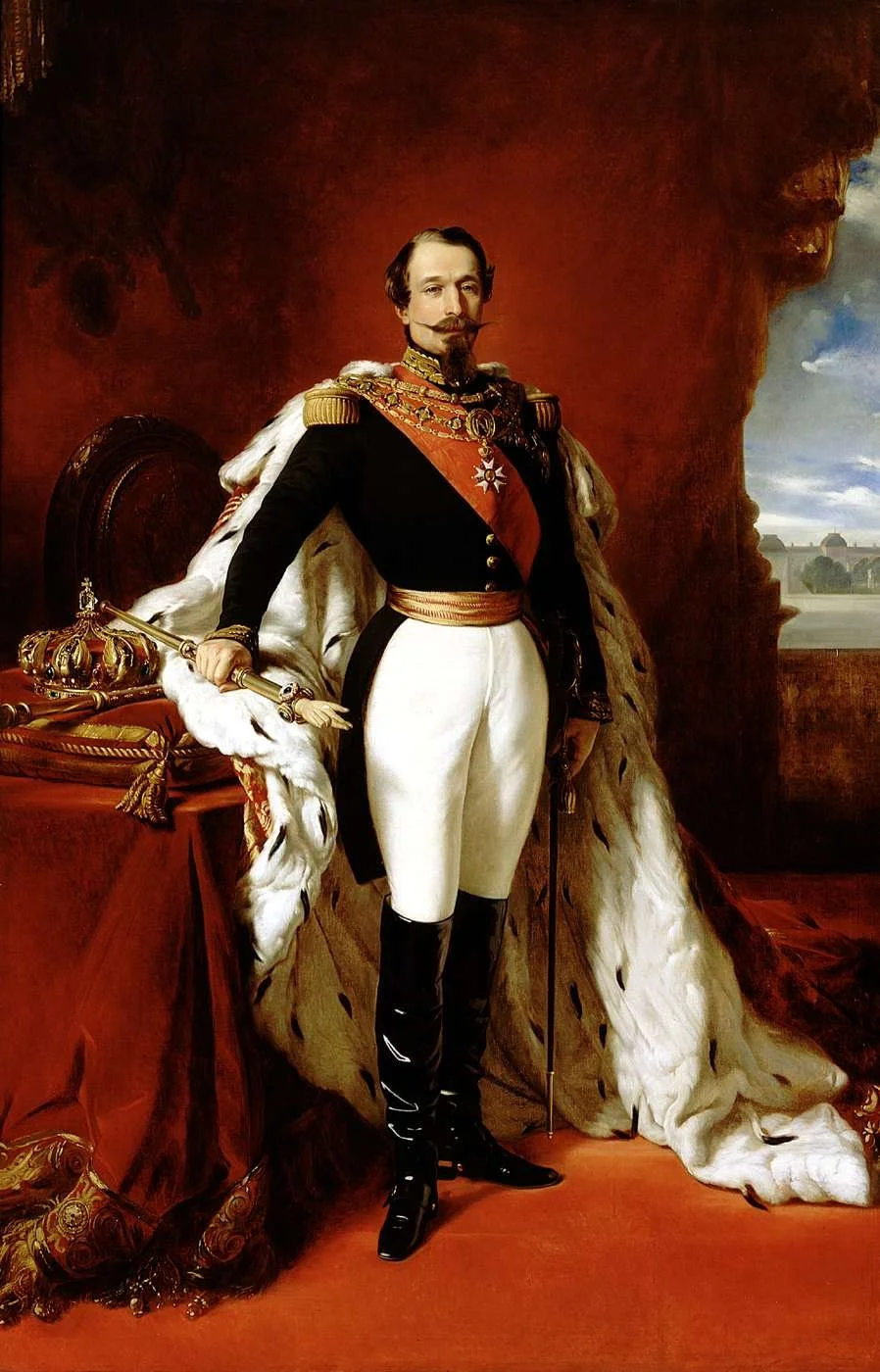
Napoleon III depicted by Franz Xaver Winterhalter ca. 1853. The painting is held in the Napoleonic Museum and is in the public domain.
Napoleon III (1808-1873) had fought in the Franco-Prussian War. After the defeat of the Second French Empire, and his release from German captivity, he was exiled to England in early 1871. During this period he travelled to the West Country and visited Mount Edgcumbe in 1871.
Napoleon III’s famous uncle Napoleon Bonaparte (1769-1821) is also associated with Plymouth for he was detained aboard HMS Bellerophon in Plymouth Sound in July 1815 before his exile to St Helena. People flocked to catch a glimpse of the famous prisoner and it was reported in The Plymouth and Dock Telegraph that on Sunday 29th as many 10,000 persons in a thousand small boats circled the Bellerophon.
“The Empress of Austria, the King of Sweden, many other royal personages, and a host of distinguished visitors might be named – such as the Walpoles, Pitt, Nelson, and others – but they would take too long to enumerate. Had a “guest book” been kept it would be a history in itself; but, until latterly, this has unfortunately not done. When further, we think of the many naval and military officers who have passed through the doors of the house since the days of Sir Francis Drake, and of the fact that the grounds of the house have been thrown open to the public on one day a week, we may certainly say that Mount Edgcumbe must be among the best known country places in England.”
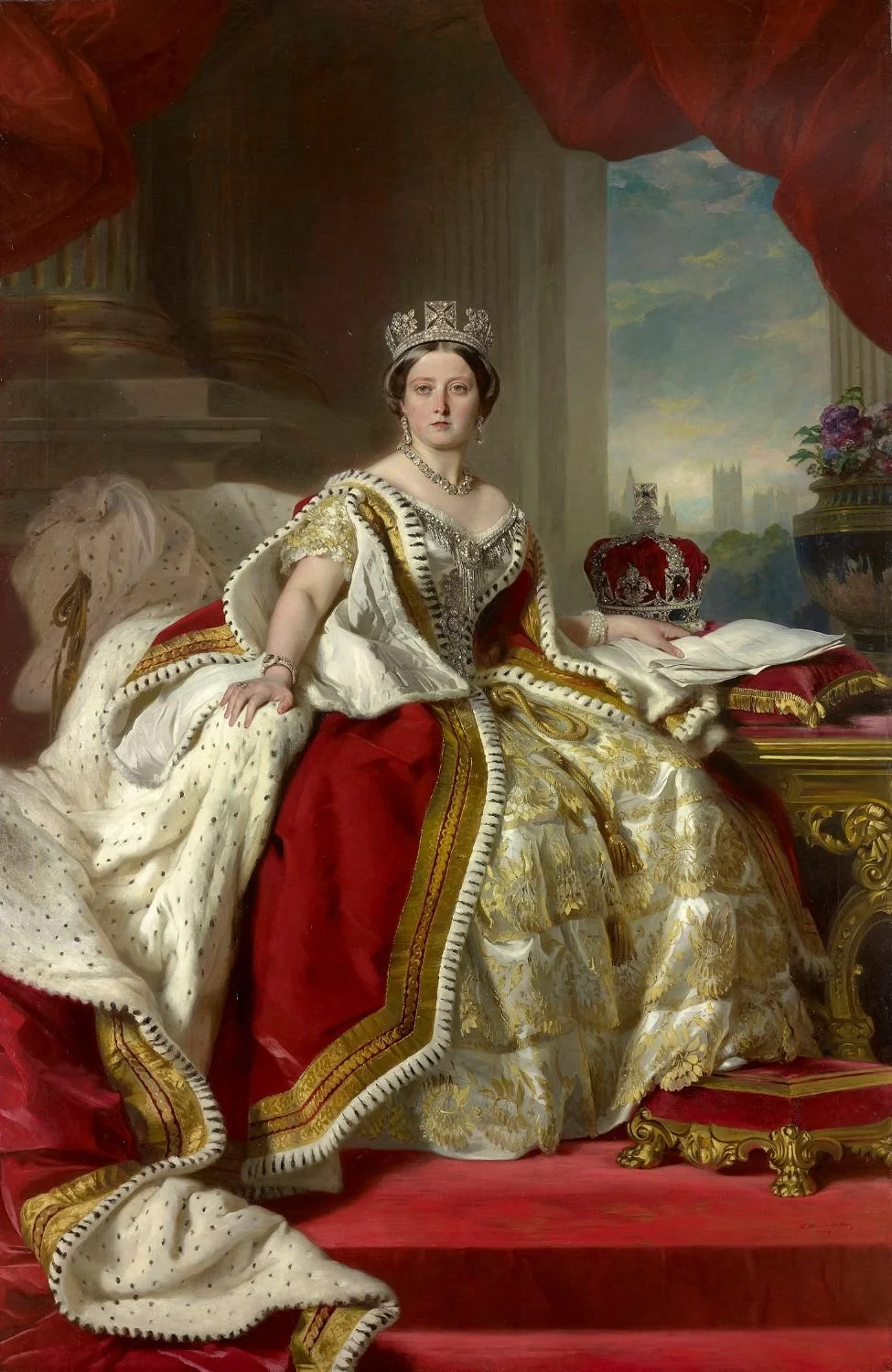
Queen Victoria in a painting executed in 1859 by Franz Xaver Winterhalter and now held in the Royal Collection (RCIN 405131) and in the public domain.
Queen Victoria (1819-1901) visited Mount Edgcumbe on a number of occasions and Cotehele in 1846 and in 1856.
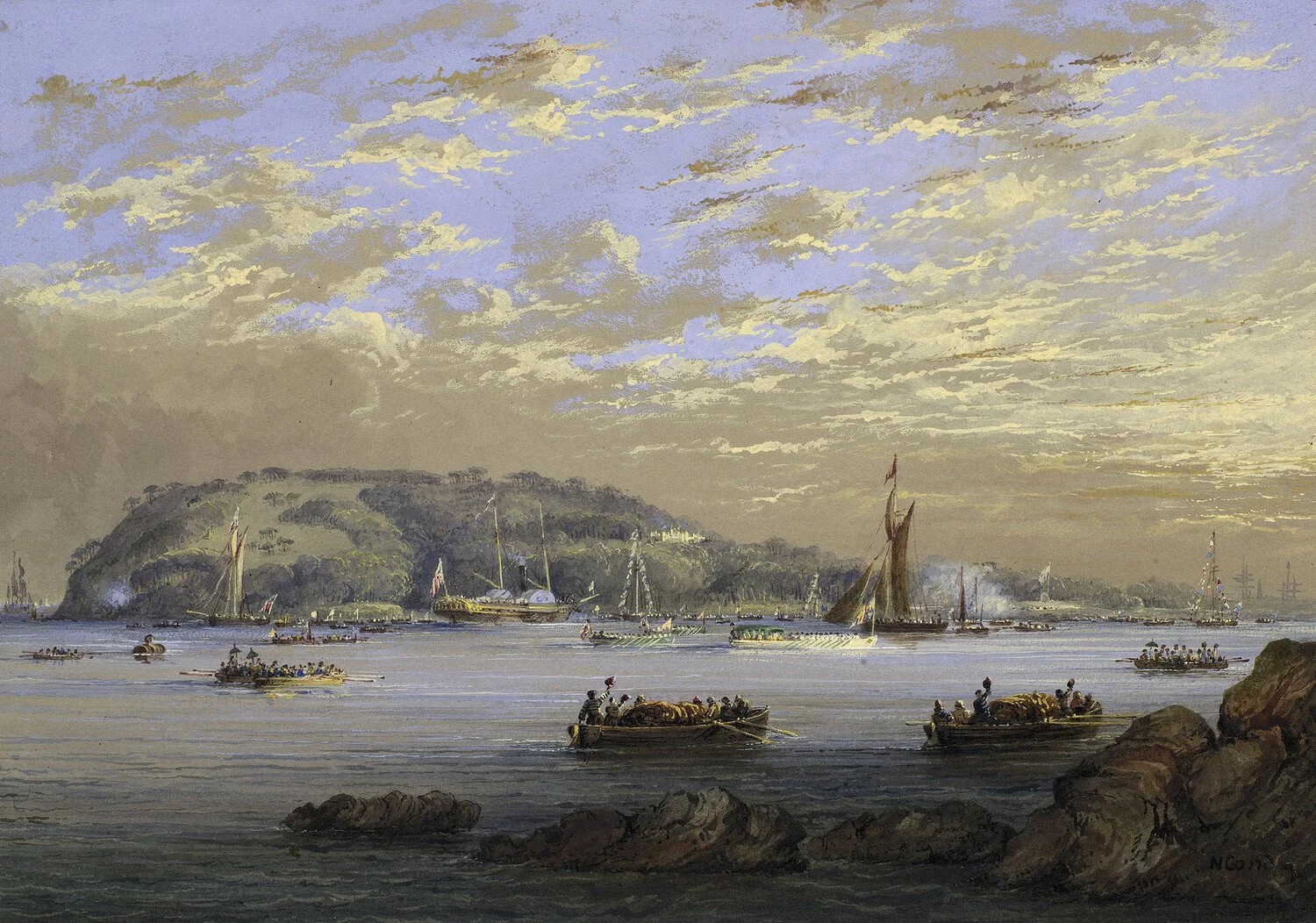
A watercolour showing the Royal Yacht 'Victoria and Albert I', the royal barge and other shipping, with a distant view of Mount Edgcumbe. On 30 August 1843 the Queen and Prince Albert sailed up Plymouth Sound and anchored off Mount Edgcumbe, which the Queen described in her journal as 'the most lovely place imaginable'. The painting is signed 'N Cond...' [paper torn]
The painting is attributed to Nicholas Condy (1793-1857). The artist’s son, Nicholas Matthews Condy (1816-1851) also painted Mount Edgcumbe on a number of occasions. The image here (RCIN 920162) is held in the Royal Collection Trust / © His Majesty King Charles III 2022
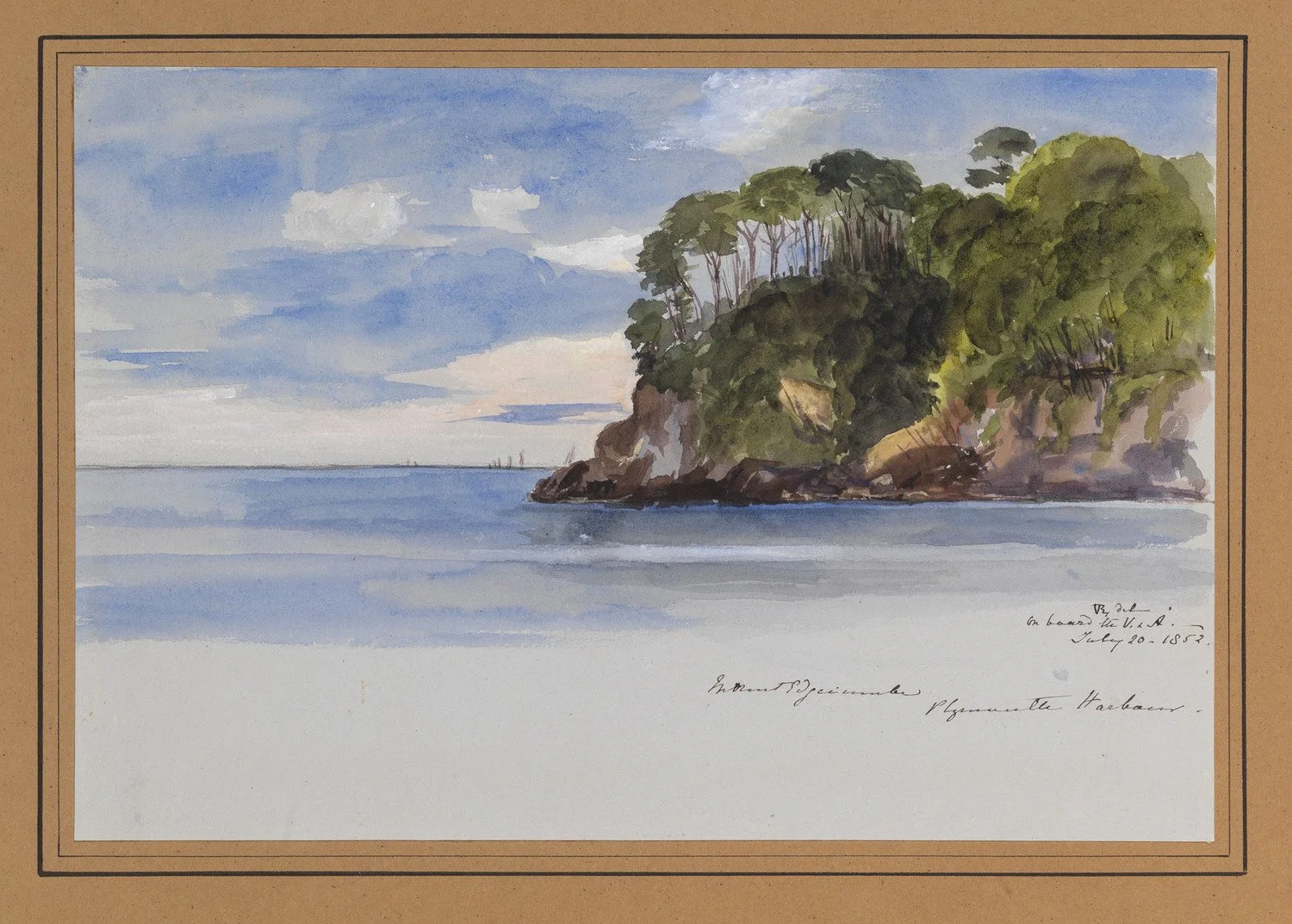
A watercolour By Queen Victoria, painted from the Royal Yacht. Queen Victoria had sailed from Osborne House to Devon with her husband, Prince Albert and some of their children on 19 July 1852. The painting depicts Mount Edgcumbe country park from Plymouth Harbour. Trees are shown covering the top of a cliff, to the right.
The image (RCIN 980055.bk) is held in the Royal Collection Trust / © His Majesty King Charles III 2024
References
Ernestine Edgcumbe (1897) ‘Mount Edgcumbe’, The Pall Mall Magazine Vol. 123, No. 49: 149-63
Lorenzo Magalotti (1669) Travels of Cosmo the third, Grand Duke of Tuscany, through England during the reign of King Charles the second, Translated from the Italian manuscript in the Laurentian library at Florence, consulted via Internet Archive on 18/09/26